
The Use of PTFE Convoluted Hose in EV Cooling Systems
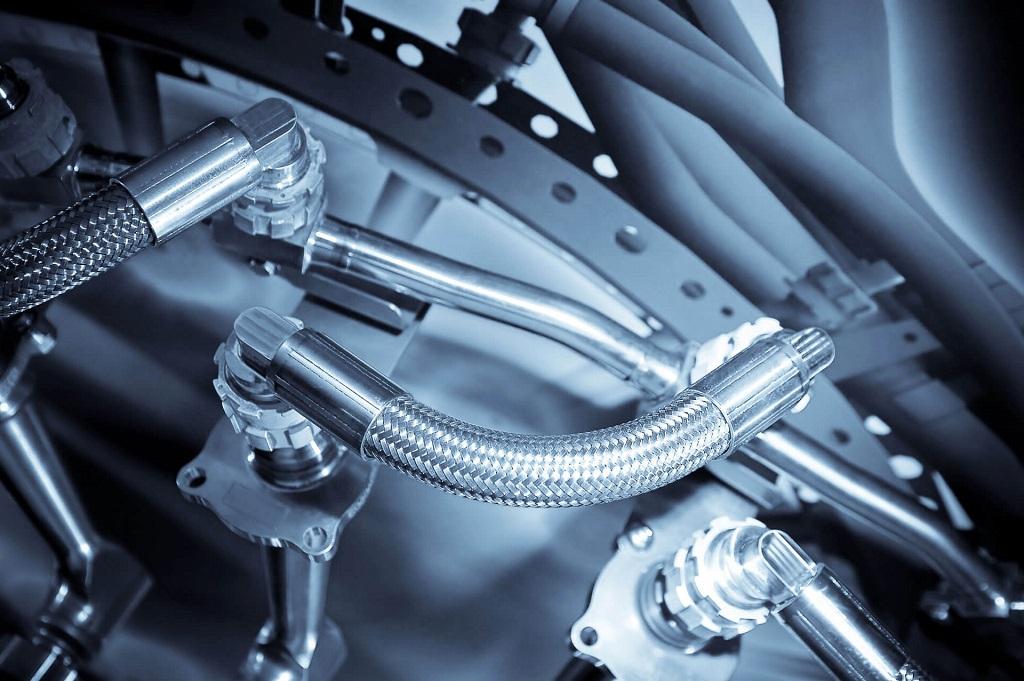
The proliferation of electric vehicles (EVs) has brought a sharper focus on the intricacies of thermal management. In contrast to conventional internal combustion engines (ICE), EVs must manage heat from diverse sources: high-voltage batteries, electric motors, power electronics, and often all within one system.
PTFE convoluted hoses are increasingly favored for their ability to meet these demanding requirements.
1. Unrivaled Thermal and Chemical Resistance
PTFE is renowned for its ability to withstand temperatures up to 260 °C (500 °F), far surpassing typical materials used in traditional hoses. This makes PTFE especially suitable for segments of EV cooling systems that endure intense thermal loads—like power electronics and fast-charging battery modules. PTFE also exhibits outstanding chemical inertness; it resists degradation from a broad spectrum of coolants and additives, ensuring long-term reliability.
2. Flexibility and Ease of Installation
The “convoluted” design – consisting of corrugated patterns allows PTFE hoses to bend around tight corners without kinking or loss of performance. In the congested architecture of EVs, where space is at a premium, this bendability becomes a significant advantage during both design and assembly. Fine radii of curvature, combined with smooth internal surfaces, also help minimize hydraulic resistance.
3. Durability & Longevity
Thanks to excellent resistance against chemicals, heat, UV exposure, and pressure cycling, PTFE convoluted hoses deliver exceptional durability. Bench tests show PTFE hoses outperform rubber alternatives by maintaining integrity well beyond 5,000 hours in ethanol-blended fuels—while rubber hoses fail after just 2,000 hours. These qualities translate into reduced maintenance costs and longer life cycles—especially crucial in EVs, where accessibility for repairs can be limited.
4. Advanced EV Cooling Needs & PTFE’s Role
EV thermal requirements are notably different from ICE systems. Batteries need to stay within tightly regulated temperatures (20–40 °C), while motors and inverters can exceed 150 °C during operation or rapid charging. This wide temperature span demands hose materials that not only perform under heat but also endure frequent thermal cycling. PTFE meets these criteria, performing reliably across broad temperature swings and maintaining leak-free, flexible operation.
Moreover, evolving EV platforms—like those from Tesla and Hyundai—often demand hoses that withstand high dielectric stress due to high-voltage architectures. PTFE’s excellent electrical insulation properties make it a strong contender here, either on its own or as a lining in multi-layer designs.
5. Alternative Materials: TPV & Their Role
While PTFE excels in many respects, cost and environmental considerations drive interest in alternative materials. One example is thermoplastic vulcanizates (TPVs), such as Teknor Apex Sarlink® TPV, which offer lighter weight, recyclability, and competitive chemical resistance. TPVs still need to match PTFE’s temperature tolerance and long-term performance, particularly in demanding cooling circuits—but they present a promising, more sustainable alternative in non-extreme segments of EV thermal networks.
6. Challenges & Trade-offs
Despite its many strengths, PTFE isn’t without challenges:
- Cost: PTFE hoses tend to be more expensive than rubber or basic thermoplastic hoses.
- Manufacturing complexity: Convoluted, reinforced PTFE designs require precise material control and tooling, elevating production costs.
- Market-specific alternatives: Many EV makers currently favor materials like EPDM, silicone, or TPV, particularly in lower-temperature regions, to optimize costs and recyclability.
- Permeation tendencies: PTFE can allow minor permeability of certain gases or vapors over time, which may be a consideration in select high-precision cooling circuits unless addressed with special barrier layers.