
Singapore’s Vehicular Economy: The Hidden History Behind Your Car’s Planned Obsolescence
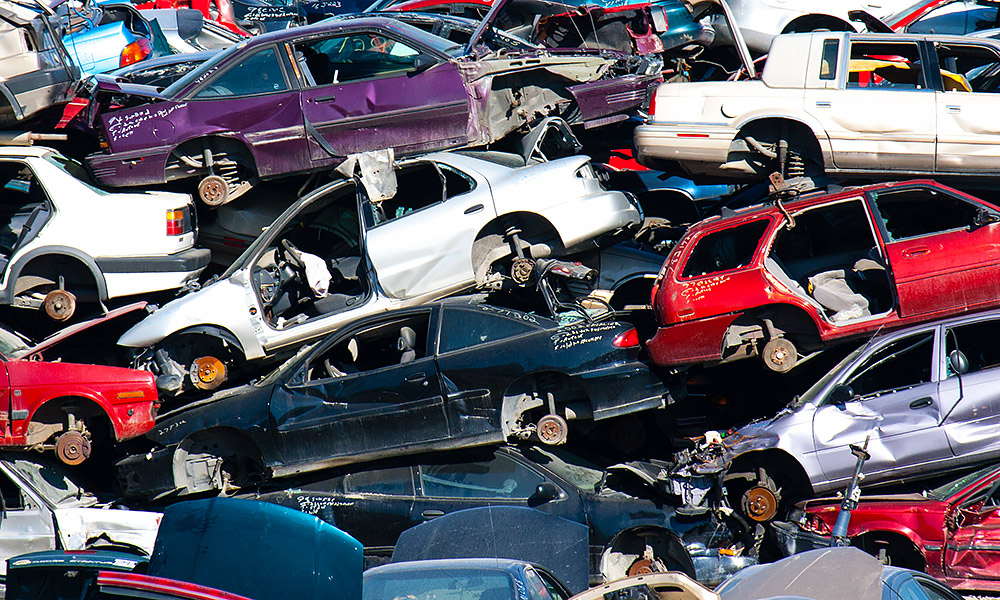
The intricate bureaucracy governing the scrap car Singapore industry reveals much about the city-state’s distinctive brand of managed capitalism—a system where even the lifespan of personal vehicles becomes an instrument of state economic planning. Behind this seemingly mundane process of automotive disposal lies a complex interplay of historical forces, regulatory regimes, and economic imperatives that have transformed Singapore from a colonial entrepôt into a gleaming monument to state-directed development.
The Colonial Shadow: Origins of Singapore’s Transportation Controls
Singapore’s contemporary vehicle management system cannot be understood without examining its origins in colonial administration. The British established the foundation for Singapore’s highly regulated approach to transportation:
- Road construction projects in the 1920s created the first comprehensive urban planning
- The 1931 Road Traffic Ordinance established centralised vehicle registration
- Post-war reconstruction prioritised infrastructure for commerce over personal mobility
- Early attempts at congestion control became templates for today’s quota systems
“The contemporary Singaporean approach to vehicle management represents not so much a break from colonial systems but rather their logical extension and refinement,” explains Dr. Teo Chee Hean, historian at the National University of Singapore. “What began as British attempts to manage colonial traffic flows evolved into one of the world’s most sophisticated systems of automotive social engineering.”
This historical continuity reveals how thoroughly the apparatuses of colonial control have been repurposed for postcolonial state-building—a pattern repeated across Singapore’s development model.
The Political Economy of Automotive Restriction
Singapore’s Certificate of Entitlement (COE) system, implemented in 1990, represents perhaps the world’s most dramatic intervention into automotive consumption. This quota system, which effectively sets an expiration date on vehicle ownership, transforms cars from durable goods into depreciating leases:
- The average Singaporean pays three to four times more for vehicle ownership than consumers in comparable developed economies
- The system generates approximately S$2-3 billion in annual government revenue
- Vehicle ownership costs consume nearly 15% of median household income for car-owning families
- The government justifies these costs through rhetoric of environmental necessity and spatial limitations
“What makes Singapore’s approach so remarkable is not merely its restrictiveness, but how thoroughly it has reconstructed the social meaning of automobile ownership,” notes urban economist Dr. Lily Wang. “The car has been transformed from a potential symbol of middle-class freedom into a scarce luxury good whose consumption is minutely regulated by state bureaucracy.”
This transformation of necessity into virtue—turning Singapore’s spatial constraints into a justification for revenue-generating restriction—exemplifies the pragmatic authoritarianism that characterises the Singapore model.
Material Flows: The Afterlife of Automotive Capital
Follow a vehicle through Singapore’s scrapping process and you witness a remarkably efficient system of material reclamation:
- Nearly 95% of vehicle components find second lives through recycling or refurbishment
- Catalytic converters yield precious metals including platinum, palladium and rhodium
- Steel components return to the global commodity stream through regional refineries
- Electronics enter a grey market of reuse that extends across Southeast Asia
These material flows connect Singapore’s pristine streets to a vast regional network of resource extraction and reclamation, creating what environmental sociologist Rahman Abdullah calls “an invisible economy of automotive afterlives that stretches from Jurong to Jakarta.”
The efficiency of this system belies its economic logic: by artificially shortening vehicle lifespans through regulatory means, Singapore creates a continuous stream of relatively young vehicles entering the dismantling process, many of which would have decades of potential service remaining in less restrictive markets.

Class Dimensions of Mobility Control
The economic implications of Singapore’s vehicle restrictions create distinct mobility experiences across class lines:
- For the wealthy, vehicle ownership represents a prestige consumption good with minimal financial impact
- For middle-class owners, vehicles constitute major financial liabilities requiring significant percentage of household income
- For working-class residents, the system effectively removes private vehicle ownership as a realistic option
- For migrant workers, mobility becomes entirely dependent on employer-provided or public transportation
“The COE system functions as a regressive consumption tax that disproportionately impacts middle-income households,” argues transportation equity researcher Siti Aminah Ibrahim. “While presented as environmental policy, its practical effect is to stratify mobility options along income lines more dramatically than virtually any other developed nation.”
This stratification creates a landscape of differential mobility that reinforces existing class divisions—the quintessential example of how Singapore’s development model has delivered remarkable material prosperity alongside firmly entrenched inequality.
The Environmental Paradox
Singapore’s automotive regulations present a fascinating environmental contradiction:
- The quota system successfully restricts total vehicle numbers, reducing congestion and direct emissions
- Premature scrapping creates higher embodied carbon costs through accelerated manufacturing cycles
- The system incentivises purchasing new vehicles rather than maintaining existing ones
- Resource extraction demands for new vehicle production offset many environmental gains
This contradiction exemplifies the broader tensions within Singapore’s environmental approach—a system that achieves impressive local environmental metrics while potentially displacing environmental costs elsewhere in the global supply chain.
Conclusion
Singapore’s vehicle management system stands as perhaps the world’s most comprehensive experiment in automotive social engineering—a system that has transformed cars from durable consumer goods into temporary leases mediated by state bureaucracy. What appears at first glance as merely technical regulation reveals itself, upon closer examination, as a powerful mechanism of social control, economic management, and state revenue generation. For Singaporeans navigating the complexities of vehicle ownership, understanding these historical and economic dimensions provides essential context for anyone contemplating the heavily bureaucratised process of engaging a scrap car Singapore service.